What to look for in a clinical trial and why older adults should be included
What to look for when choosing a study and deciding whether to participate
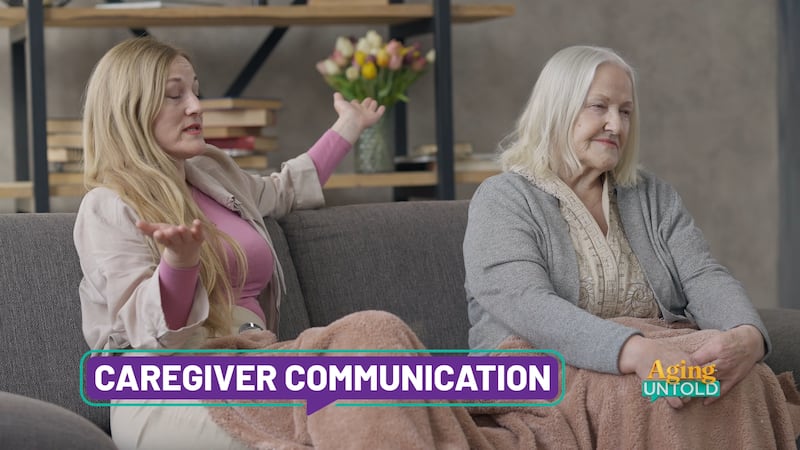
(Aging Untold) — Clinical trials can be a proactive way to explore new treatments, but studies show older adults are often left out of them, even though many conditions affect older adults more often.
The Aging Untold experts hosts are discussing what to look for when choosing a study and how to decide whether to take part.
Start with the question the trial is trying to answer
Dr. Rhea Rogers, a board-certified physician, said the first step is to change the question you ask.
“I think the first thing we have to do is not think about, ‘Can this clinical trial help me?’ but ‘What is this clinical trial trying to answer?’” Rogers said. “That’s what most of these trials are about.”
A trial is not a last resort
Rogers said many people see clinical trials as a last resort.
“I think a lot of people think that it’s a last resort option, that you don’t have anything else, when in fact one of the biggest benefits is it gives you access,” Rogers said. “You get great access to tomorrow’s medicines today — devices, therapies and other things that will not be available to everybody else for years.”
Where to find a study
Rogers said people can search at ClinicalTrials.gov , check with their physician or look at academic centers and other organizations specific to a disease or condition that have their own studies.
What participants may get
Rogers said participants can receive close monitoring and access to specialists.
“Many of them will pay for gas, and everything like that,” Rogers said. “Some of them even pay you for the study.”
Aging expert Amy O’Rourke said that the National Institutes of Health (NIH) keeps a list of clinical trials and which compensate participants.
Know what to expect going in
What participants should know is that they might receive a placebo, she said.
“You might be the one getting the placebo, you might get the drug itself,” O’Rourke said. “So knowing that going in, the expectation wouldn’t be that I’m going to get the drug or that I’m going to see if I’m going to get better.”
She said she has seen people often come away from trials feeling hopeful and feeling they are giving back to their community.
Clients who joined a local clinical trial group also found support, O’Rourke said.
“The social workers there were amazing,” she said. “They had support groups, and it gave them access to resources in the community that they didn’t know about, in addition to all the medical specialists. So I saw that being a huge value for people, especially when you’re older.”
Why older adults are needed in trials
O’Rourke said older adults are often left out of research.
“I’ve heard older people called ‘evidence free’ because nobody really studies them,” O’Rourke said. “They’re not included in the studies.”
Gerontologist “Sam” Cradduck said older adults should be included because medication does not affect all age groups in the same way.
“Medication metabolizes so differently in our older community than it does in our younger community, so without having them as participants, they’re often walking blind,” Cradduck said.
Cradduck added that new medicines cannot be approved without clinical trials.
“You can’t have a new medicine come out without a clinical trial. It’s not going to be approved,” Cradduck said. “If we want new medications, if we want new hope, we have to have these clinical trials.”
Addressing the “guinea pig” concern
Many people tell themselves they don’t want to be a guinea pig, Cradduck said.
“You’re not a guinea pig,” she said. “By the time it’s reached this point, it has been thoroughly tested repeatedly.”
Cradduck said there are adverse effects with everything that gets prescribed.
Resources
National Institutes of Health: finding a clinical trial
Key takeaways
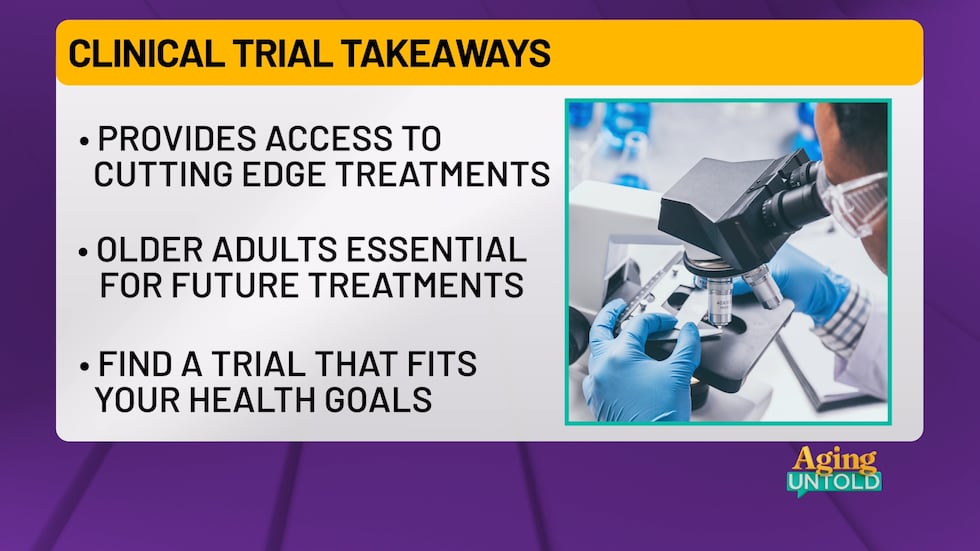
- Tomorrow’s medicine today. Clinical trials are not a last resort. They are a way to access cutting-edge treatments early.
- Older adults are essential. Drugs affect older bodies differently, and participation builds safer future treatments.
- Ask the right questions. Find out what scientific question the trial is trying to answer to make sure it aligns with your goals.
- Know where to look. Start at clinicaltrials.gov , and check with your physician, academic centers or other organizations that run their own studies.
- Know what to expect. Participants may get a placebo or the drug itself, and the NIH lists which trials compensate participants.
This program is provided for educational and informational purposes only and does not constitute providing medical advice or professional services. The information provided should not be used for diagnosing or treating a health problem or disease, and those seeking personal medical advice should consult with a licensed physician. Always seek the advice of your doctor or other qualified health provider regarding a medical condition. Never disregard professional medical advice or delay in seeking it because of something you have seen on this program. If you think you may have a medical emergency, call 911 or go to the nearest emergency room immediately. No physician-patient relationship is created by this program or its use. Aging Untold/Gray Media, nor its employees, contractors or agents, nor any contributor to this program, makes any representations, express or implied, with respect to the information provided herein or to its use.
Copyright 2026 Gray Media Group, Inc. All Rights Reserved.