Price County district attorney not pursuing charges against midwife after death of infant
After the family filed a John Doe petition with the judge, it forced the DA to take a second look at the criminal investigation
PHILLIPS, Wis. (WSAW) – The Price County district attorney decided not to file charges against a midwife who provided care to a pregnant mother whose baby died during labor in 2023.
The decision was filed on Tuesday. It is the second time DA Matthew McElroy made that decision, in the case of the death of Josie and Alex Schmidt’s daughter, Marien. He stated he did not believe he could prove the crimes beyond a reasonable doubt.
The family believes their midwife, Sandra Pera, is to blame. Pera’s attorneys stated in their letter to the Wisconsin Department of Safety and Professional Services (DSPS) that the family “exaggerates and attempts to sensationalize the labor and delivery at issue.”
Her attorneys said in a statement to 7 Investigates that Pera fully cooperated at every step of the legal and licensing processes. However, in July, Pera refused to interview with criminal investigators after the Schmidts attempted to sue civilly.
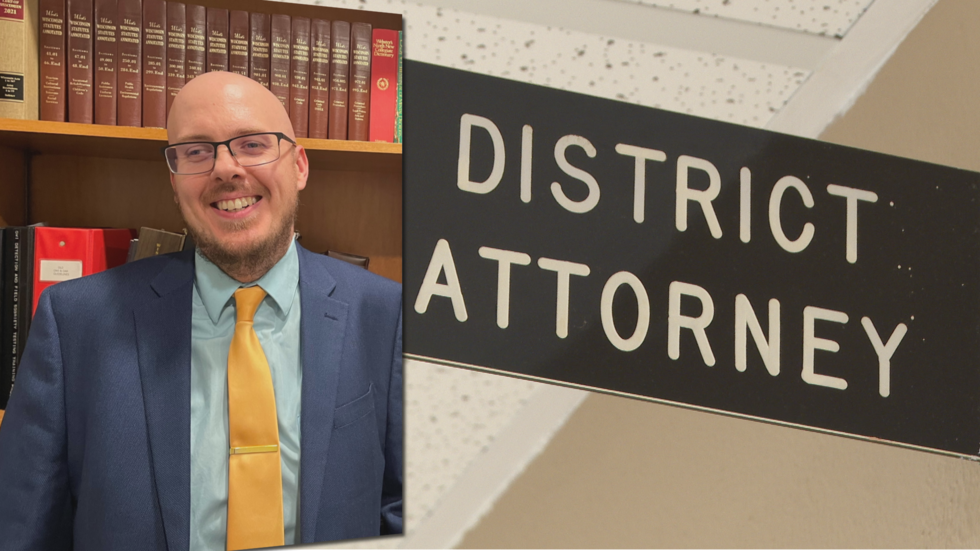
McElroy was required to take a second look at the 230-page criminal investigation after the family who lost their child under the midwife’s care filed a John Doe petition in January with Price County Judge Kevin Klein. Judge Klein accepted the petition in March and gave McElroy 90 days, as the law requires, to either file charges or explain why he declined to prosecute.
He based his review on the charges the investigators referred in their case file: second-degree reckless homicide of an unborn child, second-degree recklessly endangering safety, and a few minor charges of theft, and misdemeanor battery. Over three pages, McElroy explained why he did not believe he could prove the crimes happened beyond a reasonable doubt for each referred charge.
“(W)hile Ms. Pera did not provide a high level of care that does not mean she was criminally reckless and therefore criminally liable,” McElroy stated in the decision.
He cited the autopsy report in his decision as a reason he did not believe he could prove the charges.
“The autopsy of the decedent determined the cause of death to be complications from a prolonged labor. Ms. Pera was not informed right away that labor had begun and when Ms. Pera was informed she expressed frustration that she was not told sooner. Therefore there was a period of time during the beginning stages of labor in which Ms. Pera was not involved.”
According to the criminal case file, Pera did not instruct the Schmidts when they should call to inform her about labor. Pera received a call at 7:48 p.m. on Feb. 27 from the Schmidts informing her Josie was in labor. Pera, who lives a couple of hours away from the Schimdts’ home, arrived at 9:28 p.m. Josie was about 7 centimeters dilated and was not in the pushing stage of labor. She was completely dilated and instructed to push after 10:43 p.m.
McElroy noted he spoke at length with the investigators and consulted with another prosecutor about the evidence and burdens of proof.
While probable cause may exist to file charges, McElroy stated, “unless there is a reasonable possibility the charges can be proven beyond a reasonable doubt, that charges should not be filed. The State has an obligation to use evidence based (sic) charging practices when reviewing cases in order to remain as objective as possible. The State does not believe it can prove these charges, therefore, the State is not filing a criminal complaint in this matter.”
The John Doe process
As the law describes, the case file now goes to Judge Klein. He can either make the same decision as McElroy or decide charges should be filed. He can either do that with the existing case file or he can convene a John Doe proceeding.
The point of the proceeding is to determine whether a crime has been committed. If Judge Klein chooses to move forward with a proceeding, he can subpoena and examine witnesses at his discretion. If he finds enough credible evidence that the case warrants prosecution, he can issue a criminal complaint and file charges.
“That will then require the appointment of a special prosecutor because obviously, the district attorney has already declined to charge,” Ben Kempinen, professor emeritus with UW-Madison Law School said.
The judge can also agree with the prosecutor’s decision.
Kempinen explained that should the judge believe charges are not warranted, “there’s really nothing they can do,” because the judge, essentially, has executive power.
He said John Doe proceedings are similar to a grand jury, but there is no jury, and the decision-making power rests in the judge’s hands. Often, the proceeding is a tool used by prosecutors rather than laypeople.
“What makes it attractive to prosecutors is, in situations where it appears a crime has occurred and some harm has been caused, it provides for some investigative tools that aren’t normally available,” Kempinen explained. “And that is, witnesses that (sic) are believed to have knowledge about the possible crime, can be subpoenaed and forced to testify, under threat of contempt, (and) often are given immunity. And so it’s a way to often develop evidence that wouldn’t otherwise be available to law enforcement.”
He said it is particularly useful in organized crimes where individuals may fear for their life if they talk.
However, as the Schmidts did, laypeople who claim to have knowledge of a crime, are able to file a petition directly with a judge. In an effort to prevent abuse of that process, the law requires the judge to send the case back to the district attorney for review.
Kempinen said people who are aware of another law process aimed at rural Wisconsin under “Issuance and filing of complaints,” sometimes will choose that route over a John Doe proceeding; sometimes they do both.
“That particular statute provides that if a district attorney is unavailable, and of course in the 1800s, that might be because his horse was lame, or there was a blizzard, or refuses, a citizen can go right to a judge. And it’s somewhat less procedurally demanding.”
This procedure, like John Doe, is also not frequently used.
Michigan licensing files “formal charging document”
Following 7 Investigates first report about the Schmidts’ case, more people have come forward to share their own midwifery expertise or personal experience directly with Pera. That includes individuals who have reported to Michigan Licensing and Regulatory Affairs (LARA).
While Pera can no longer practice midwifery in Wisconsin, she has an active license in Michigan.
“My biggest fear is that she’s been able to, like, practice, and I’m worrying about moms,” Josie Schmidt said.
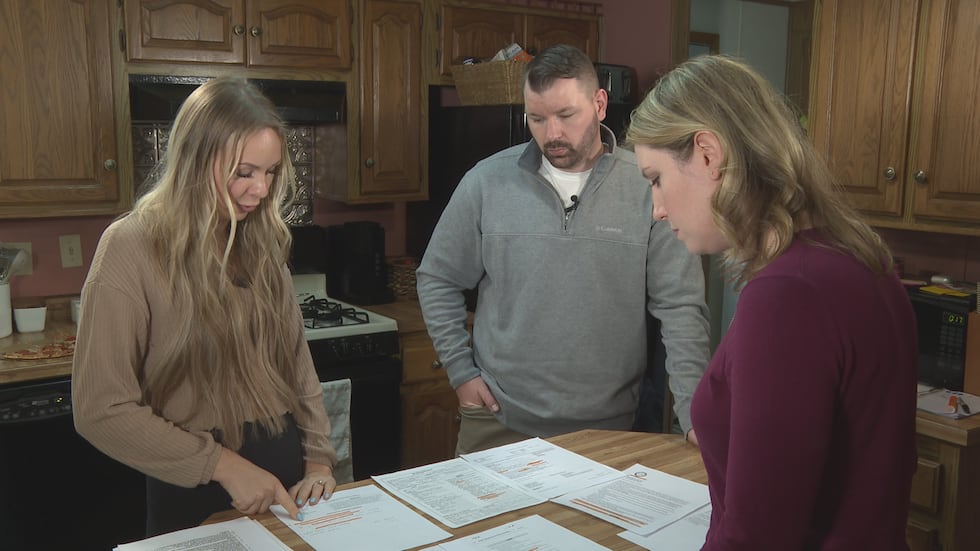
The Schmidts interviewed with 7 Investigates in early November before they would learn that Pera would voluntarily surrender her license in Wisconsin without admitting any wrongdoing. Pera chose this option rather than go before an administrative law judge as DSPS investigated two complaints against her license, including the Schmidts’ complaint.
In February, LARA confirmed with 7 Investigates that Pera’s license was active, but there was also an ongoing investigation. However, before March 25, 2024, it was not listed on her licensing page.
That was the case for the Schmidts when doing their research into both states before hiring Pera in 2022.
“I just feel like they’re going in there blind like I was,” Josie said. “Like, I hired her when she had a pending investigation. I had no idea.”
She found out after her daughter’s death in the spring of 2023 when her attorney at the time shared what she had learned from DSPS.
DSPS previously explained to 7 Investigates that complaints and investigations are confidential unless adjudicated or actions have been taken that stemmed from complaints.
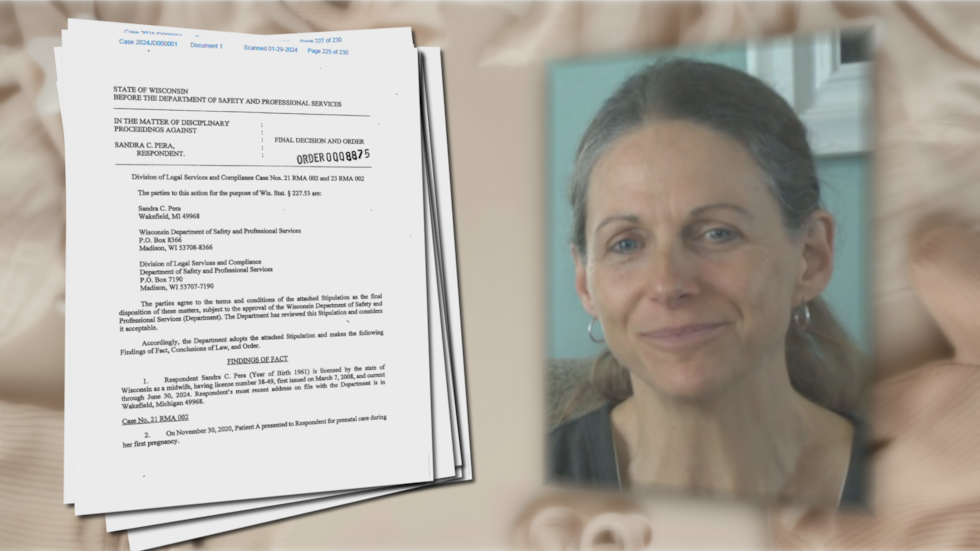
Michigan’s process is similar. However, as of March 25, Pera’s license publicly shows that she has a “formal open complaint.”
7 Investigates asked LARA communications director, Abby Rubley, why the previous confirmation of an investigation into Pera’s license was not noted on her licensing page before March 25. She explained that notification indicates that an administrative complaint has been filed. It was filed based on the investigation that was already happening and is now complete.
According to LARA’s description of its complaint process, the filing of an administrative complaint means the initial complaint has already gone through several other steps in the review process. That administrative complaint, LARA also referred to as the “formal charging document.”
That means, according to the state’s description, that LARA believes that evidence exists to show that the public health code has been violated. Since Pera’s license is listed as “Active,” it is likely that the state has not issued a summary suspension, meaning the state does not believe there is an imminent threat to the public’s health, safety, or welfare.
The process describes that Pera would have been contacted when the administrative complaint was filed in March. She would then have 30 days to respond or the state would automatically sanction her license.
If she responded, the next step would be LARA and Pera would have a compliance conference. Like in Wisconsin, Pera would have the opportunity to settle with the state. If she and the state do not come to an agreement, the next step would be an administrative hearing.
Finally, whether Pera comes to an agreement with the state or her case goes to an administrative hearing, the disciplinary subcommittee will issue a final order.
“We cannot disclose the specific status of this case until the administrative process is complete and the Disciplinary Subcommittee issues a final order, which will be posted online for the public,” Rubley stated.
7 Investigates contacted Pera’s attorneys to respond to both the Price County district attorney’s decision and the status of her license in Michigan. They have not responded as of this publishing. Should they respond, this story will be updated.
NARM
Many states, like Wisconsin and Michigan, look to the North American Registry of Midwives for the basis of their certification in their licensing rules.
People can file a complaint with NARM within 24 months of the last care provided by a midwife. However, they must provide a signed release and confidentiality agreement from the patient within two weeks of the complaint or the complaint will be closed.
NARM publicly lists certifications that have been revoked. Pera is not on that list.
Copyright 2024 WSAW. All rights reserved.